
Olduvai Gorge
Tanzania’s Oldest Detective Scene
“Cradle of mankind's” technical & intellectual evolution
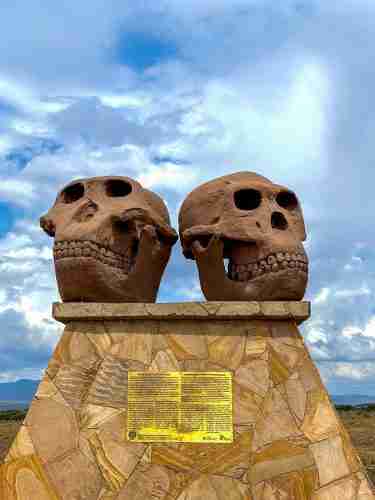
Peering into the great amphitheater of Olduvai Gorge you are witnessing the archeological history of mankind. For this world-renowned site has revealed an incredible collection of fossilized human bones, skulls, and prehistoric tools. Spread out before you is not only the earliest evidence of our ancestors but a record of their continuing evolution over millions of years.
Here in this “Cradle of Mankind” you’ll see proof of the first human steps taken on two feet, of man walking upright – hominid footprints persevered in volcanic rock, dating back to 3.5 million years.
At Olduvai, not only will you view man’s earliest stone tools, but a progression of how those tools evolved – from simple chipped pebbles to the development of the hand axe.
Considered the most significant paleoanthropological site in the world, the unearthing of fossilized mammal and human bones and tools continues. During your visit you may even witness an active dig, searching for yet more historic discoveries.
Olduvai Gorge Photos
Mary and Richard Leakey
No story of Olduvai would be complete without an introduction of the Leakeys. Indeed, Richard and Mary Leakey are synonymous with the notoriety of the gorge. Starting in the 1930s, this husband and wife team began their search in Olduvai for ancient artifacts, finding stone tools and then a 25-million-year-old fossilized skull from an ape
But the moment that put the Leakeys and Olduvai on the map was a day in 1959 when Mary Leakey discovered parts of a fossilized early human skull. Soon thereafter, the Leakeys discovered hundreds of pieces of an almost complete hominid skull. Even more startling was the realization that they had found a new category of human, one not previously known.
Dating back 1.75 million years, this was the oldest human ancestor discovered and clear proof that humans had their origins on the African continent.


Layers of Antiquity
Nature and the land of Olduvai have conveniently organized this treasure of antiquities into four distinct layers or sediment beds. Standing at the edge of the main dig at the gorge, you can see these different levels – the lower ones being the oldest.
This segmenting allows archaeologists to accurately date their many discoveries and make evolutionary connections. The artifacts found in Bed 1, the oldest, date back to around 1.75 to 1.9 million years.
A Record of Evolution
The progression of tools found on the site is an amazing window into mankind’s technical and intellectual evolution. In the oldest beds, prior to the discovery of tools, archeologists have found evidence of scavenging, noted by gnaw marks that predate the cut marks made by tools.
The discovery that tools and animal remains were collected in a centralized area shows a developing social interaction. This communal behavior evidences an evolution in early man’s cognitive abilities and the first indications of conduct that could be recognizable as our own.
Olduvai Gorge Highlights
Olduvai Museum – One of the largest onsite museums in Africa, situated near the gorge, it features interactive exhibits shedding light on the area’s many discoveries. Enjoy a detailed walking exhibit of human evolution and exacting reproductions of the area’s significant finds.
Guided tours – Guides, native to the area conduct tours illuminating the history and significance of the gorge.
Oldupai Gorge Monument – Erected in 2019, the monument stands as a tribute to this world-renowned site and as a road marker indicating its nearby presence.
Olduvai Gorge Location, Facts & Figures
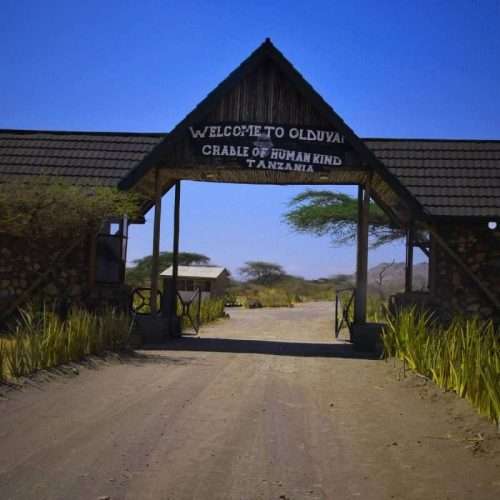
“Oldupai” is the Masai word for the wild sisal plant that grows all around the area. This steep-sided ravine 48 km (30 mi) long and 89 m (295 ft) deep exposes four layers or beds, the oldest being about 2 million years.
In the Great Rift Valley between Serengeti National Park and the Ngorongoro Crater in northern Tanzania.
Expect daytime temperatures in the range of 300C (860F). Like the rest of the region, there are two rainy seasons from March to May and from September to November.
The dry season June to October allows for the best environment for walking tours.
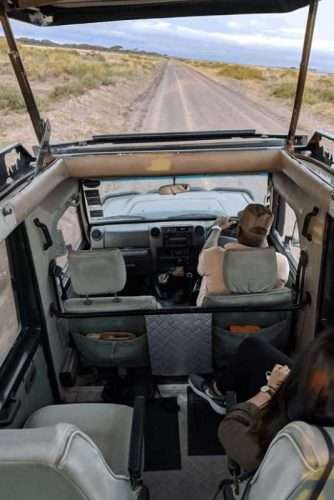
Book a tour with Africa Kenya Safaris and you’ll safari in style in one of our custom 4 x 4 Land Cruiser Jeeps.
This is Olduvai Gorge
A treasure of antiquity and a natural monument to mankind’s evolution, Olduvai Gorge changed the face of archeology and what we know about how our ancestors lived and developed. Olduvai is a wonderful detour on your northern Tanzania safari – a chance to come up close with the face of history.
Discover More About Olduvai Gorge
Here are some frequently asked questions (FAQs) about Olduvai Gorge.
Where is Olduvai Gorge located?
Olduvai Gorge is located in the eastern Serengeti Plains in northern Tanzania, East Africa. It lies within the Ngorongoro Conservation Area, approximately 45 kilometers (28 miles) from the world-famous Ngorongoro Crater.
Why is Olduvai Gorge significant?
Olduvai Gorge is one of the most important paleoanthropological sites in the world. It has yielded numerous fossil remains and stone tools that provide valuable insights into human evolution and the ancient history of our species. The gorge has played a crucial role in shaping our understanding of early hominids and their behaviors.
Who discovered Olduvai Gorge?
Olduvai Gorge was discovered by a team of scientists led by Louis and Mary Leakey, prominent paleoanthropologists, in the 1930s. They recognized the area’s potential for containing important fossil evidence and initiated extensive excavations that continue to this day.
What fossils have been found in Olduvai Gorge?
Olduvai Gorge has yielded fossil remains of various early hominid species, including Homo habilis and Australopithecus boisei. Some notable discoveries include the famous “Zinjanthropus” (now classified as Paranthropus boisei) and the Homo habilis skull known as “OH 7” or “Twiggy.” Additionally, numerous animal fossils have been found, providing insights into the paleoenvironment and the diet of early hominids.
How old are the fossils found in Olduvai Gorge?
The fossils found in Olduvai Gorge date back to different time periods, ranging from about 2.1 to 1.8 million years ago (Ma). These fossils represent an important window into the early stages of human evolution and provide valuable information about our ancestors’ anatomy, behavior, and adaptations.
Can visitors explore Olduvai Gorge?
Yes, visitors can explore Olduvai Gorge and its surroundings. There is a visitor center at the site that offers exhibits and information about the area’s significance. Guided tours and walks are available, allowing visitors to see the excavation sites and learn about the ongoing research. However, it’s essential to check the current regulations and access restrictions, as they may vary.
Is Olduvai Gorge part of a national park?
Olduvai Gorge is not part of a national park but falls within the Ngorongoro Conservation Area, which is a protected area managed by the Ngorongoro Conservation Authority. The conservation area encompasses various habitats, including the Ngorongoro Crater, the highlands, and the Serengeti Plains.
Are there accommodations near Olduvai Gorge?
Yes, there are accommodations available near Olduvai Gorge. Lodges, campsites, and safari lodges can be found within the Ngorongoro Conservation Area, providing options for visitors to stay overnight and explore the area at their leisure.
Join us at Olduvai Gorge
Africa Kenya Safaris offers journeys to Oldupai Gorge and other attractions in the region. Just contact us to get your safari started.
Here are some of our tours bringing you to Olduvai Gorge:
4 parks: Masai Mara, Serengeti, Ngorongoro Crater & Lake Manyara
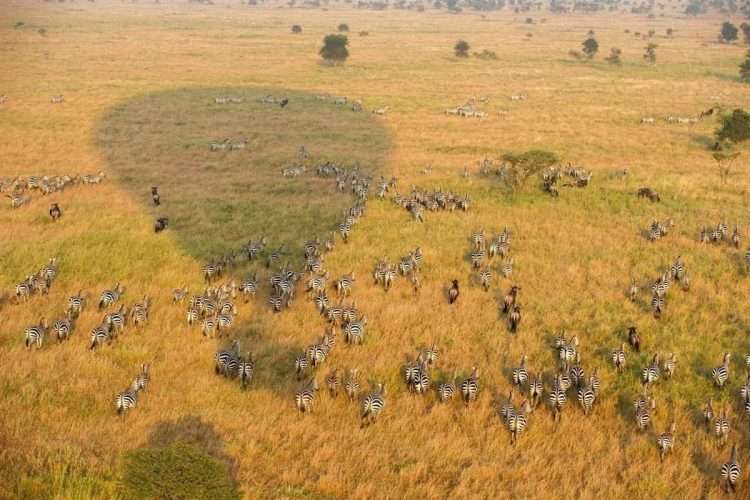
5 parks: Masai Mara, Lake Victoria/Serengeti/Ngorongoro, & Tarangire
Questions About Our Tours?
Your Story Begins Here
Contact Us Today and See Where it Takes You